
DOMINARCH™ / FEATURES
How a state is run.
And what it costs.
DOMINARCH™ is a modern sovereign-state simulator. You govern one state in the world of 1 January 2026, and every order touches the economy, society, the armed forces, your partners and your energy supply at once. These are the systems that make that true.
I. / SIGNATURE SYSTEM
National Pressure
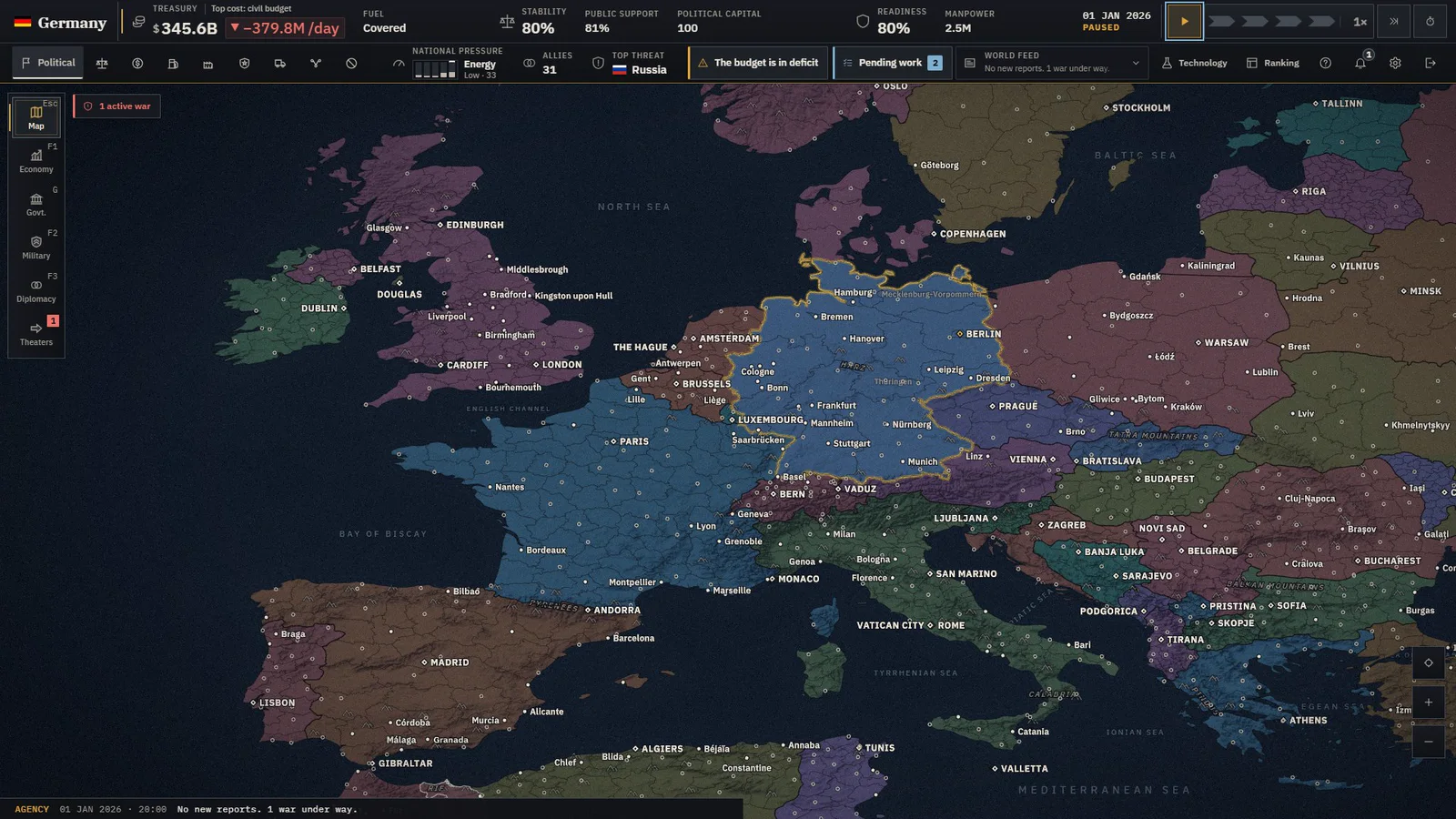
Five pressures run all the time: economic, social, military, diplomatic and energy. A decision moves several at once, and the game shows the balance rather than hiding it in a modifier.
- A larger defence budget lifts readiness, draws on the treasury and industry, and can cost stability.
- The top bar keeps treasury, stability and readiness in view, so you can see why money moves.
- Relief for one pressure usually adds weight to another. Choosing which one to carry is the job.
- Economic
- Social
- Military
- Diplomatic
- Energy
II. / SIGNATURE SYSTEM
Crisis Chains
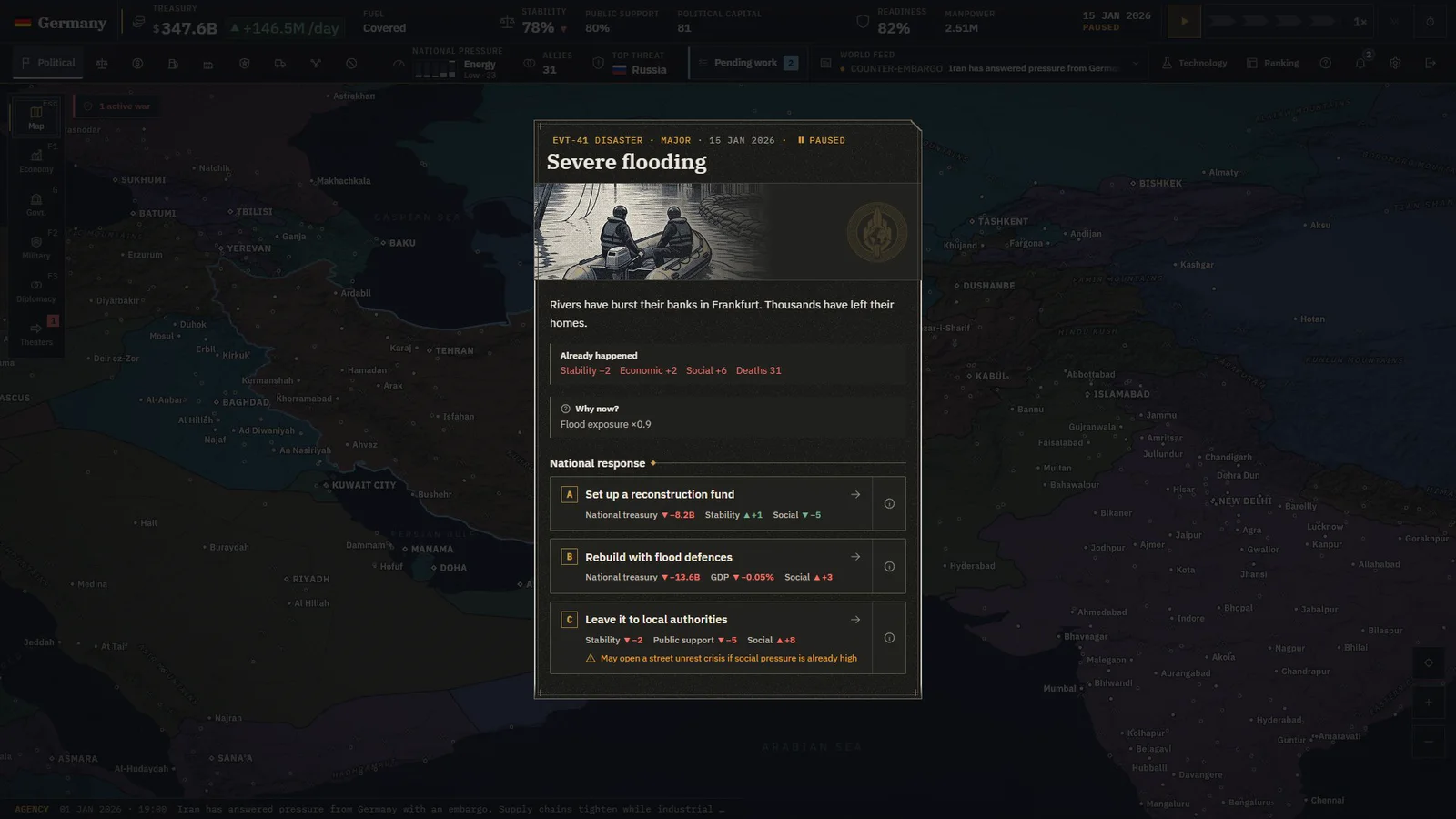
A crisis is not a pop-up. It has stages: a cause, a first effect, a second effect and a choice the cabinet cannot avoid. It grows one stage a week until you answer.
- Every national response shows its cost before you pick it.
- Your choice ends the chain, and its cost lands on production, stability or relations.
- Waiting is also a choice: the next stage arrives on its own.
AN ENERGY CRISIS, FOR EXAMPLE
- CAUSESupply shock
- EFFECTFuel costs rise
- CONSEQUENCEIndustry slows
- YOUR DECISIONChoose a response
III. / SIGNATURE SYSTEM
War Has a Price
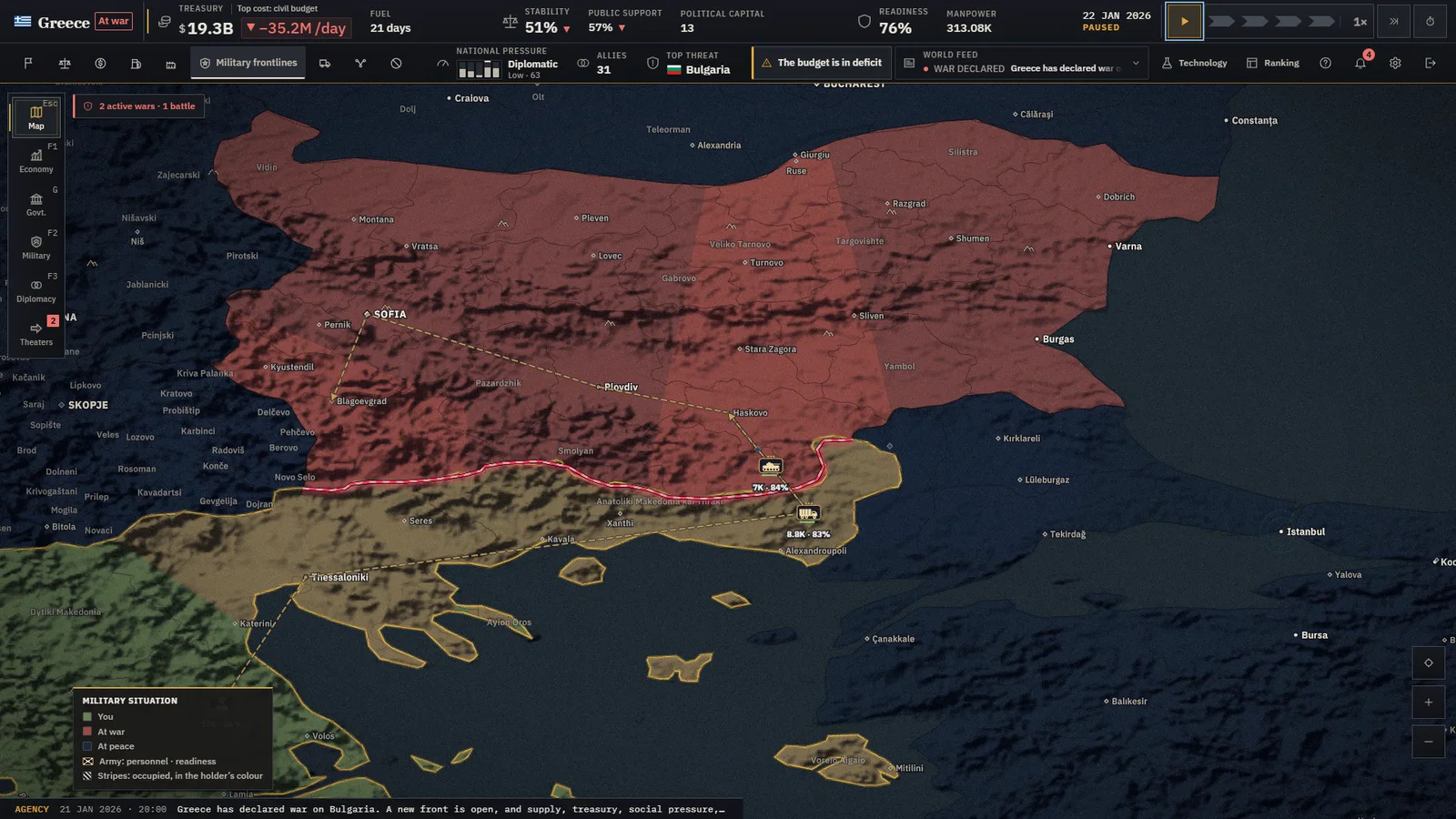
War is one of your tools, not the loop. An active war drains the state every day, and you can take land while the treasury, the economy and the public turn against you.
- Every day at war drains treasury, stability, fuel and manpower; industry, trade and diplomatic standing feel it too.
- Each war card shows its daily price and the armistice offer that ends it.
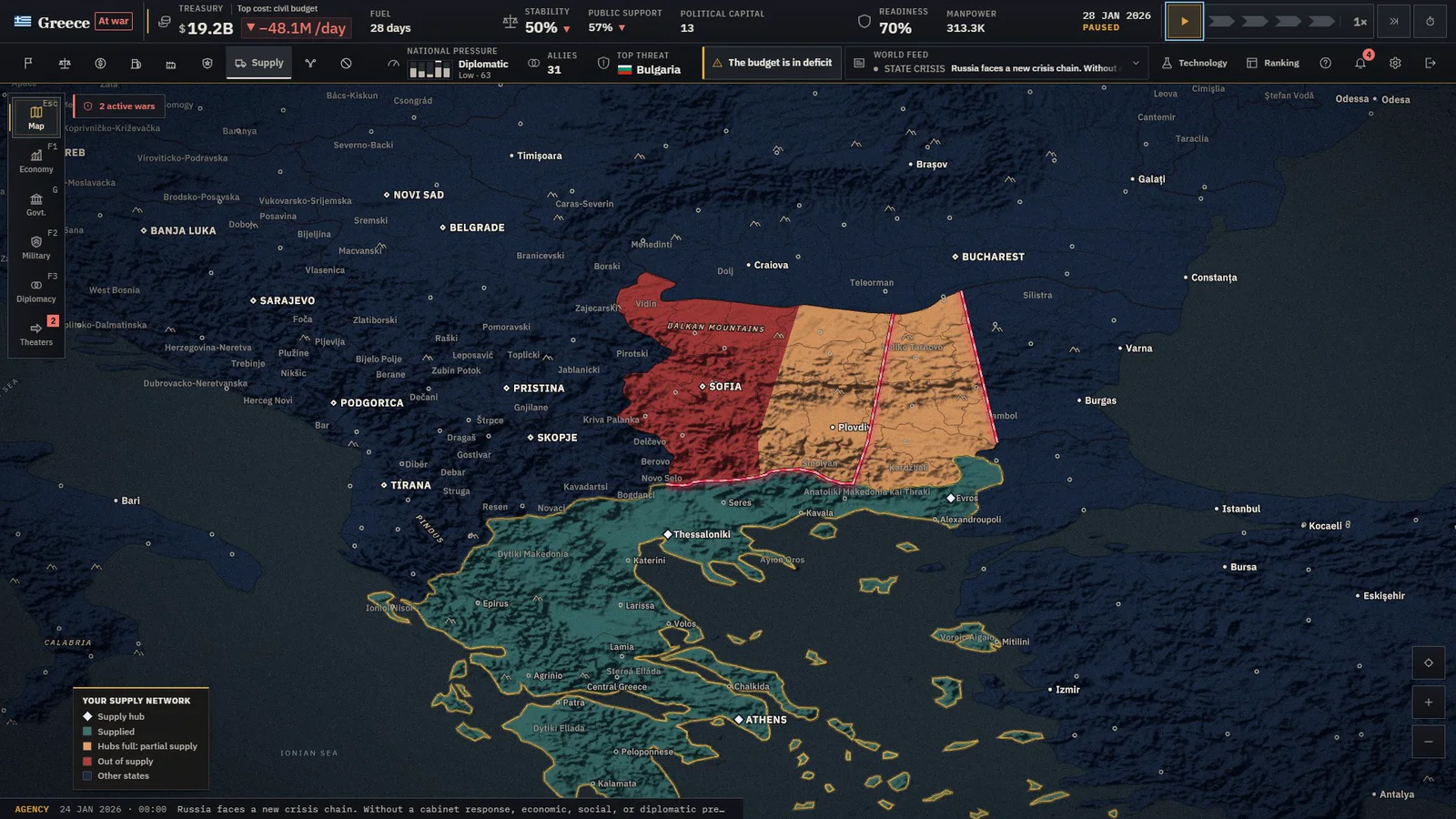
- Armies fight only as far as supply reaches. Divisions out of supply lose readiness.
- Occupied land needs supply and costs stability while you hold it.
Victory,
billed daily.
GEOPOLITICS
Diplomacy and the UN
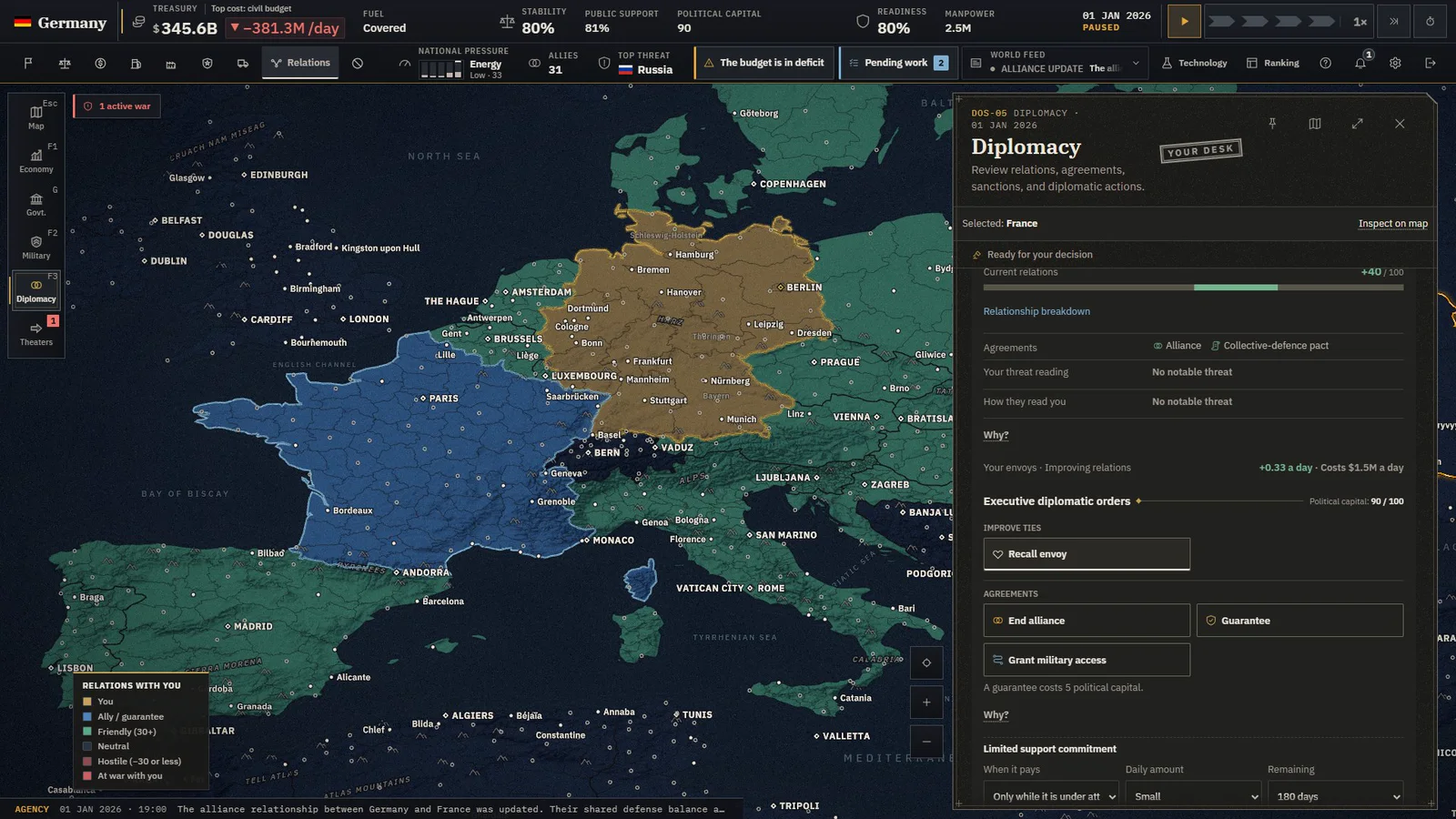
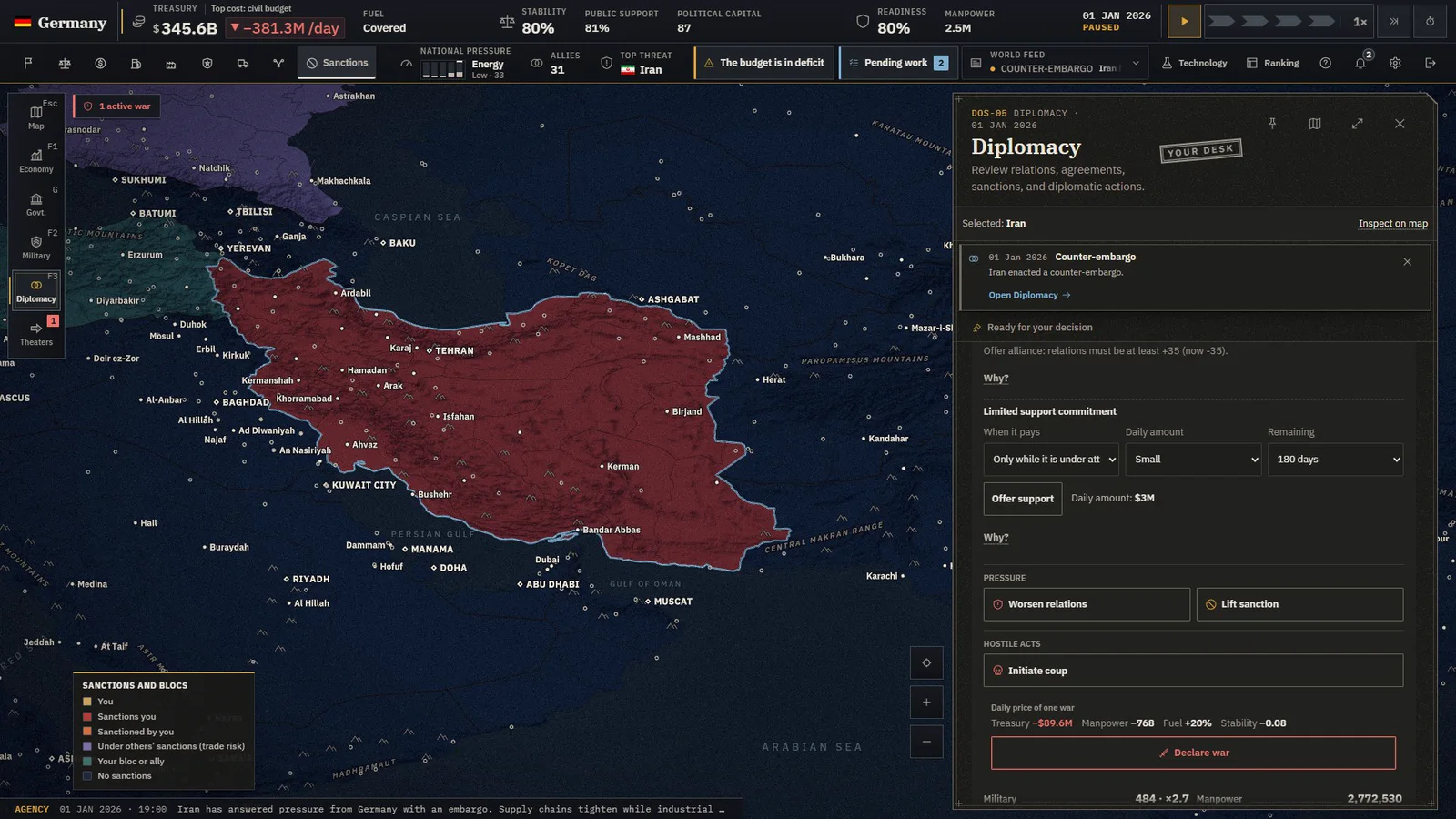
Relations, treaties and sanctions have third parties. What you sign with one state changes how others treat you.
- Alliances bind both ways: if a partner is attacked, you are called to its war.
- A sanction cuts trade between the two states in both directions, and the target can answer with an embargo of its own.
- Bring a draft to the Security Council. A permanent member can veto it, and the majority that backed it will remember.
- Offer to mediate between warring states, or seek an armistice for your own war.
STATECRAFT
Economy and trade
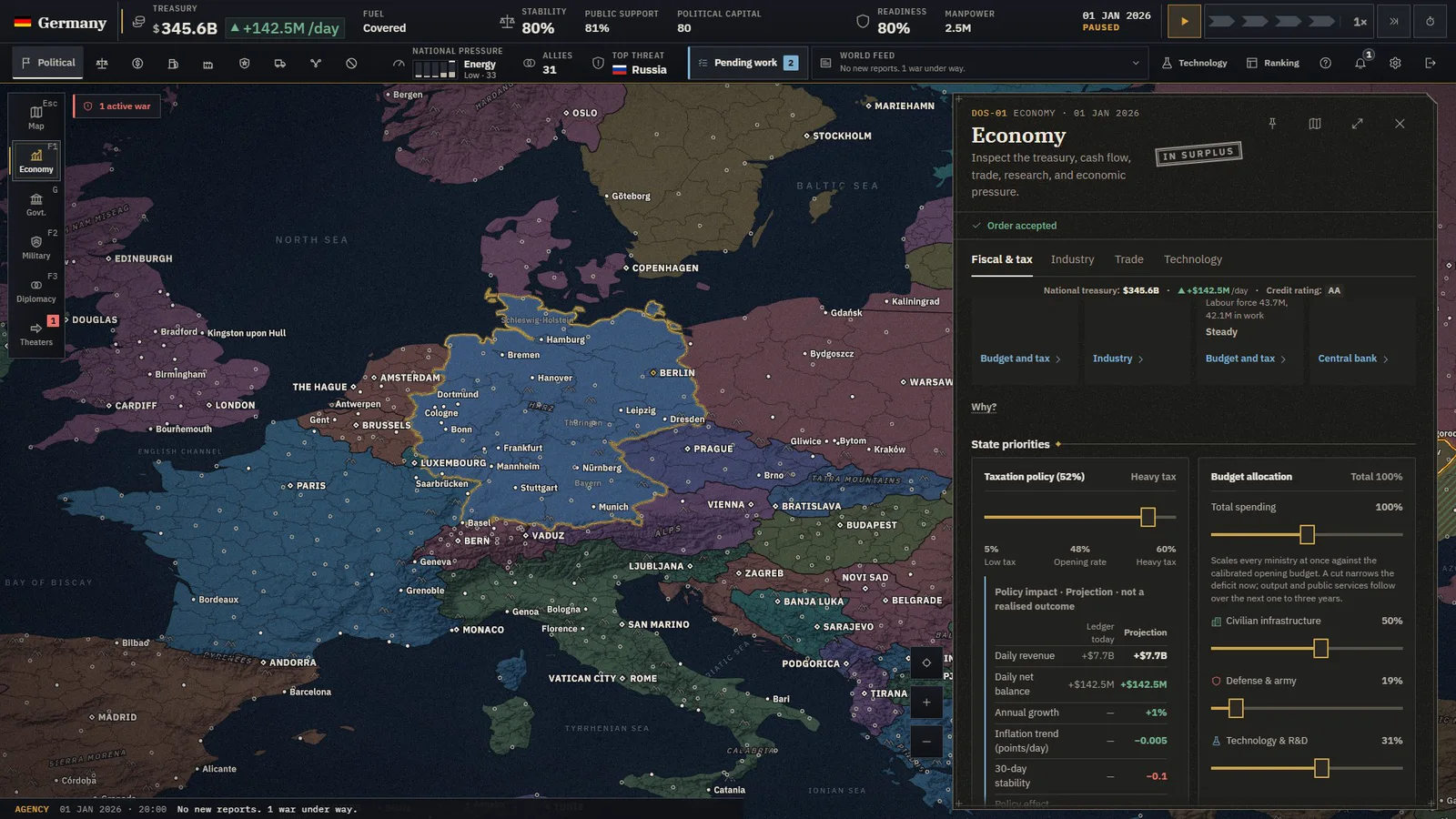
Every state opens with its own economy, calibrated from public datasets: output, industry, energy balance, trade partners and debt. You set the course from there.
- Change the tax rate and read the projection first: revenue, growth and stability move together.
- Industry, oil and gas, and fuel imports decide how long the state can keep running under pressure.
- Trade ties come from real bilateral flows, so a sanction or an embargo hits the partners that matter.
See the data sources for the datasets behind the opening.
STATECRAFT
Government
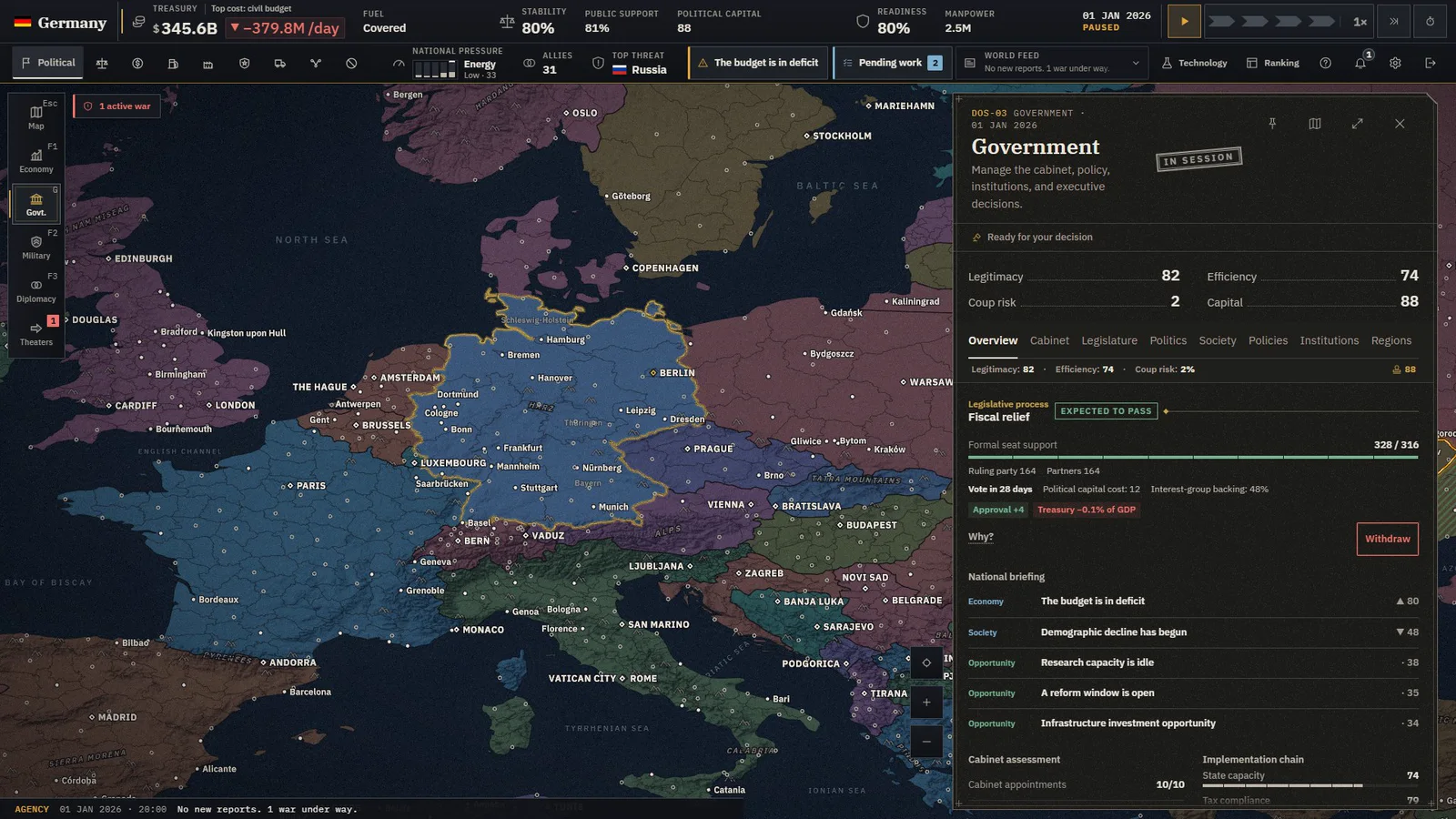
You govern through institutions, not around them. Parliaments, cabinets and offices open as they stood on 1 January 2026.
- Laws go to parliament and need the seats to pass. Once passed, a law reaches the field over weeks, at a pace set by executive strength, stability and war.
- Calling an early election costs legitimacy, and the seats are reallocated.
- Real officeholders appear by name and office only, with no portraits; the scores in the game describe the office, not the person.
- Neglected provinces can slip out of control, and a weak government can face a coup.
Run your own state.



Free to start; one purchase unlocks the full game. Questions about requirements or purchases? Visit support.